A property agent in Business Bay showed me his website with some pride. The English was sharp. Then he tapped the Arabic version, and I watched his face change as he read it. The sentences were technically Arabic. They were also the sort of Arabic nobody in Dubai has ever spoken — formal to the point of comedy in places, and in one memorable spot, a “book a viewing” button translated into something closer to “reserve an inspection.” He’d paid for translation. What he’d bought was a word swap.
Dubai runs in two languages, and plenty of business websites only truly speak one. The second language gets the machine treatment, or a rushed copy-paste, and everyone politely pretends not to notice. Arabic-speaking customers notice. They may not complain — they just quietly buy from the competitor whose site sounds like it was written for them.
Translation is not a conversion
The trap is thinking translation is a conversion, like changing dirhams to euros. It isn’t. Good Arabic content for a Dubai audience is usually shorter than the English, more direct, and written in the Modern Standard Arabic people use for business — not a dialect, but not a legal document either. Some things shouldn’t be translated word for word at all: your tagline, your offer, anything with a joke in it. Those need rewriting, by someone who understands what the sentence was trying to do.
The mechanical side: right-to-left
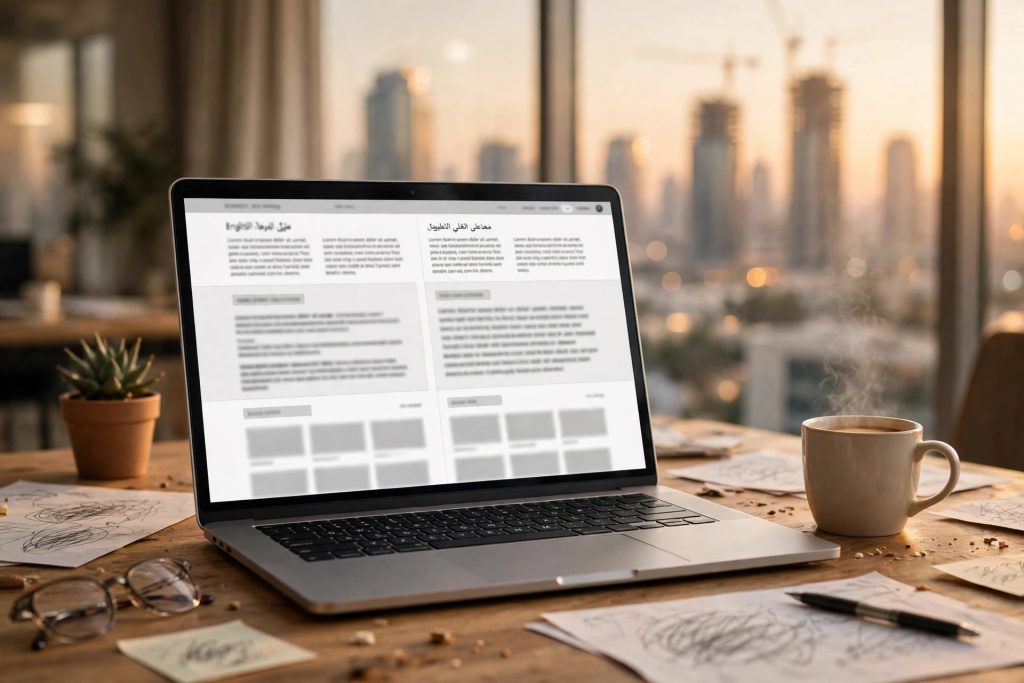
There’s also the mechanical side everyone underestimates: right-to-left layout. Text flips, but so should the layout logic — and phones, forms and checkout screens all have opinions about this. A translated page where the phone number reads backwards or the form fields jump around tells the customer exactly how much the Arabic version mattered to you.
Manage the workload: translate what sells
The workload worry is real, so here’s the honest version of how to manage it. You do not need every page in both languages on day one. Translate the pages that sell: home, your main services, contact, checkout if you have one. Leave the blog in one language until it’s earning its keep. And get a native speaker to review the important pages once a year.
Two languages done properly is a genuine advantage in this city, because so many businesses do one and a half. Your customers can tell the difference in about four seconds. So can theirs.
Want a website that speaks to both audiences in Dubai? Contact Digital Brand Hive to talk about your website.